

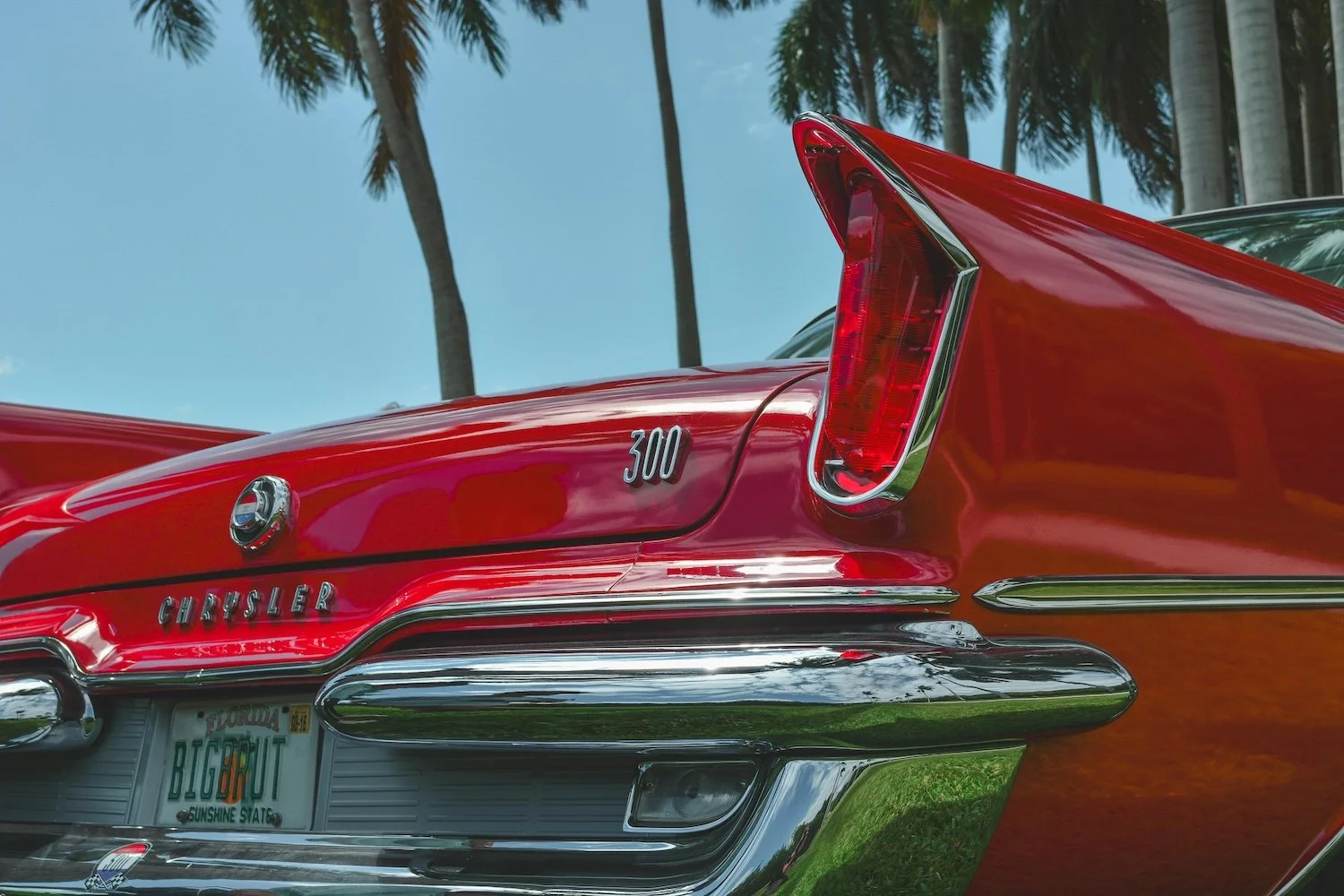
Classic Car Insurance for Florida Collectors
Agreed-value classic car coverage through Hagerty, placed by an independent agency on the Treasure Coast.
Why Classic Cars Need Specialized Insurance
A classic car is rarely worth what a standard auto policy is designed to pay you for it. Regular car insurance is built around actual cash value, the depreciated market price of an everyday vehicle on the day of loss. That formula works for a five-year-old commuter sedan. It fits poorly for a 1967 Mustang fastback, a numbers-matching Corvette, or a meticulously preserved Chrysler 300, all of which can hold or appreciate in value over decades.
Classic car insurance addresses this with agreed value coverage. You and the carrier establish the vehicle's value when the policy is written, supported by photos, appraisals, and ownership documentation. In the event of a covered total loss, agreed value policies are designed to pay the agreed amount, subject to the policy's deductible and specific terms, rather than relying on a depreciated value calculated after the loss. That single difference is the reason a specialized classic, antique, or collector car policy is generally the right tool to consider for a vehicle that means more than transportation.
Manchester Insurance is an independent agency in Stuart, Florida. We place classic car policies through Hagerty and work with you to discuss how the agreed value should be structured and how the coverage aligns with the way you use the car.
What Qualifies as a Classic Car?
The terms classic, antique, and collector get used interchangeably in conversation, but each describes a distinct category that can affect eligibility, coverage options, and premium. Here's how most specialty carriers, including Hagerty, generally define them.
Classic
Vehicles of historical interest, well-preserved or actively maintained. Think 1990s muscle, 1980s European sports cars, or any vehicle in its second or third decade with a meaningful following.
Antique
Vehicles old enough to qualify for antique plates in most states. Mid-century cruisers, muscle-era American iron, and prewar automobiles fall here. Florida issues "antique" plates at 30+ years.
Collector
Modern exotics, limited-production performance cars, and high-value vehicles regardless of age. A current-model-year Porsche GT3 or low-production supercar can be insured as a collector vehicle.
Modified vehicles, hot rods, and restomods are a fourth category worth noting. A car that's been heavily modified, chopped, dropped, LS-swapped, restored with non-original parts, doesn't always fit a standard classic policy, because the value lives in the workmanship as much as the platform. Hagerty offers programs designed for hot rods, restomods, and custom builds where the agreed value can reflect the build cost and craftsmanship.
Each carrier has its own specific definitions and eligibility rules. The categories above reflect the industry consensus; the specific cutoffs that apply to your vehicle depend on Hagerty's underwriting at the time of quote.
Agreed Value vs. Stated Value vs. Actual Cash Value
Three valuation methods determine what an insurance company is designed to pay for a total loss; and they are not equivalent. Understanding the difference is one of the most important things a classic car owner can review before binding coverage. The terminology is confusingly similar, but the financial outcomes at claim time can vary considerably depending on which method applies to your policy.
|
Agreed Value
Recommended for Classics
|
Stated Value | Actual Cash Value | |
|---|---|---|---|
| How value is set | You and the carrier agree on the car's value upfront, supported by photos, appraisal, and documentation. | You declare what you think the car is worth. The carrier accepts the number but doesn't commit to paying it. | Market value minus depreciation, calculated by the insurer at the time of loss. |
| Payout on a total loss | Full agreed value, minus deductible. No depreciation, no post-loss disputes. | The lesser of stated value or actual cash value. The stated number caps the payout but doesn't guarantee it. | Whatever the insurer calculates the depreciated value to be — often well below what a collector car is actually worth. |
| Depreciation treatment | No depreciation. Appreciation can be reflected by adjusting the agreed value at renewal. | Depreciation can still apply if the insurer falls back on ACV at claim time. | Built around depreciation. The vehicle is assumed to lose value each year. |
| Best for | Classics, antiques, collector cars, restored vehicles, and any car likely to hold or grow in value. | Modified vehicles where the owner wants flexibility but accepts payout uncertainty. | Daily drivers and standard vehicles that depreciate predictably. |
The difference shows up most clearly after a total loss. A standard auto policy on a restored classic might pay only a fraction of the vehicle's actual market value, because the carrier values the car using a depreciation schedule. An agreed value policy is designed to pay the value you and the carrier established when the policy was written, subject to the deductible and policy terms. Stated value sits awkwardly in the middle, it sounds like agreed value but functions closer to ACV, because the insurer retains the right to pay the lower of the two figures.
For most classic, antique, and appreciating collector vehicles, agreed value is generally the most appropriate valuation method to consider; and it's the foundation of Hagerty's classic car program.
What Hagerty Classic Car Policies Typically Cover
The coverages described below are commonly available through Hagerty's classic car program. Availability, limits, and specific terms depend on the policy you bind, the vehicle, and Hagerty's underwriting at the time of quote.
Hagerty's classic car policies include the same core protections as a standard auto policy, liability, collision, comprehensive, uninsured motorist, and add coverages designed specifically for the way collectors own and use their cars.
Agreed value coverage. The foundation of a Hagerty classic policy. Designed to insure your vehicle for its agreed-upon value, with claim payments based on that figure rather than depreciated value, subject to policy terms.
Spare parts coverage. Many classic owners maintain a stash of original engines, transmissions, or hard-to-find body panels. This coverage can be added to help protect those parts if they're stolen or damaged in storage, subject to policy limits and terms.
Coverage during active restoration. If your car is being restored, the policy can typically be structured so the agreed value scales upward as the build progresses, helping you avoid being under-covered partway through a frame-off rebuild.
Specialized flatbed roadside assistance. Standard tow trucks can damage a classic. Hagerty's roadside program is designed around flatbed-only towing with soft straps and operators trained to handle collector vehicles.
Original-parts repair provisions. When a vehicle is damaged but not totaled, repair coverage can include provisions for the use of original or NOS parts rather than aftermarket replacements that may compromise authenticity and value, subject to policy terms.
Event coverage. Coverage may extend to car shows, exhibitions, club tours, and rallies.
Trip permission provisions. Most classic policies limit casual use, but trip permission can allow pre-approved longer drives, or club rallies without affecting the usage and mileage representations of the policy.
Eligibility and Usage Restrictions
Specialty classic car insurance is generally less expensive than a standard auto policy for comparable coverage, because the carrier is underwriting a fundamentally different risk profile. The vehicle is driven less, stored more carefully, and operated by an owner with strong incentives to protect it. In exchange, classic car carriers, including Hagerty, apply eligibility rules and usage restrictions that you'll want to understand before binding.
Annual mileage limits. Most classic policies define annual mileage tiers, with premiums adjusted by mileage band. Hagerty offers several mileage options, and the right tier depends on how you actually use the vehicle. If you drive your classic more frequently, mileage flexibility becomes a key conversation.
Daily-driver requirement. Most classic car carriers require the household to have a separate, regularly-driven vehicle for everyday use. The specific requirement varies, but generally the household should own or lease at least one other vehicle suitable for daily use.
Driver age and experience minimums. Carriers typically require listed drivers to meet age and experience minimums, with a clean driving record. Younger or less experienced drivers in the household may be excluded from operating the vehicle. The specific requirements that apply to your policy depend on Hagerty's underwriting.
Storage requirements. Classic cars generally need to be stored in a locked, enclosed structure, most commonly a private garage. Some carriers will accept secure community storage or commercial classic car storage facilities. Open carports, driveways, and street parking typically don't qualify a vehicle for agreed value coverage.
Modifications. Significant modifications such as engine swaps, suspension changes, or body alterations can affect both eligibility and valuation. They don't necessarily disqualify a vehicle, but they may steer the policy toward Hagerty's specialty programs designed for modified vehicles, where the agreed value can reflect the build investment.
Insured Through Hagerty, the Leader in Classic Car Coverage
Manchester Insurance places classic, antique, and collector car policies through Hagerty, the largest and most established classic car insurer in the country. Hagerty has built its entire business around collector vehicles, not as a side product, but as its core focus, and that specialization shows up throughout the program: in underwriting flexibility, in claims experience with collector vehicles, and in the depth of its agreed-value methodology.
Hagerty's program is designed around the realities of classic car ownership rather than retrofitted from a standard auto product. It includes agreed value coverage, flexible mileage options, restoration coverage, spare parts protection, flatbed roadside assistance built for collector vehicles, and event coverage for car shows and club tours. For most classic car owners on the Treasure Coast, Hagerty represents a strong combination of coverage breadth, claims reputation, and pricing in the specialty market.
As a local independent agency, our goal is to help you discuss how the policy should be structured for your specific vehicle and situation, establishing an appropriate agreed value, matching mileage allowances to how you actually use the car, and making sure the usage and storage representations align with how the vehicle will actually be owned. We serve as your local point of contact for policy service, and changes, backed by Hagerty's national specialty platform.
Florida Considerations: Hurricanes, Salt Air, and Storage
Owning a classic car in Florida means thinking about risks that don't exist in most of the country. National classic car policies are written with a generic risk model that may not fully account for named storms, salt air corrosion, or the storage realities of coastal living.
Hurricane season changes the conversation. From June through November, every classic car owner in Florida should have a storm plan. Most classic policies require enclosed storage as a baseline, but during a named storm event, that may not be enough on its own. Wind-driven debris, storm surge, and roof failures can total a garaged vehicle. A common hurricane-season approach is to relocate the vehicle inland to higher elevation in a hardened structure, and most classic policies, including Hagerty's, can accommodate this kind of move through trip permission provisions that allow the relocation without affecting the usage representations of the policy.
Salt air and coastal storage. The Treasure Coast's salt air can accelerate corrosion on chrome, aluminum, and unprotected steel. Classic policies don't typically exclude corrosion-related claims outright, but they generally aren't designed to pay for gradual deterioration either, coverage is generally oriented around sudden damage events. The practical implication is that coastal classic owners often invest in climate control, dehumidification, and protective storage measures that aren't required inland. Documenting these protections can be useful both when the policy is written and at claim time.
Flood coverage is worth a careful conversation. This is one of the most important Florida specific points to discuss when structuring a classic car policy. Coverage for flood damage under classic auto policies generally falls under comprehensive coverage, and the specifics, including whether storm surge or rising water is treated the same as other flood causes, can vary by policy and endorsement.
Document the car before the storm. Before any named storm makes landfall, photograph the vehicle from every angle, save current odometer readings, and store digital copies of your most recent appraisal off-site or in the cloud. If a claim becomes necessary, this documentation may help support the settlement process.
Service Areas Across the Treasure Coast
Manchester Insurance writes classic, antique, and collector car coverage throughout Florida, with deep service across the Treasure Coast, including Stuart, Port St. Lucie, Fort Pierce, Vero Beach, Jensen Beach, Hobe Sound, Palm City, and surrounding Martin County and St. Lucie County communities. As an independent agency, we can write Hagerty policies for clients across Florida, with our team and local knowledge concentrated in this region, which is where most of our classic car clients live, store, and drive their vehicles.
Classic Car Insurance FAQ
-
Most specialty insurers, including Hagerty, generally define a classic car as a vehicle 10 to 24 years old with historical interest, an antique as 25 years or older, and a collector car as any vehicle of significant value regardless of age. Eligibility also depends on how you use the car (limited driving, not a daily driver), where you store it (secured, typically garaged), and the vehicle's condition. Each carrier has its own specific cutoffs and underwriting rules, which is why a conversation about your specific vehicle is the most reliable way to confirm eligibility.
-
Agreed value means you and your insurer establish the car's value when the policy is written, and in the event of a covered total loss or theft, agreed value policies are designed to pay that agreed amount minus your deductible, subject to the specific terms of the policy at the time of loss. Standard auto policies pay actual cash value, which factors in depreciation and may pay less than a classic is actually worth. For most classic, antique, and collector vehicles, agreed value is generally the most appropriate valuation method to consider, and part of Hagerty's program.
-
Generally no. Classic car policies are designed for limited use, such as car shows, club events, parades, occasional weekend drives. Most carriers, including Hagerty, require a separate daily-driver vehicle in the household and apply annual mileage tiers rather than allowing unlimited use. If your classic vehicle is driven more frequently than typical pleasure use, additional mileage options may be available through Hagerty. Please review the selected mileage tier and vehicle usage to confirm it matches how the vehicle will be driven.
-
Classic car insurance is generally less expensive than standard auto insurance for comparable coverage, because of limited use, secured storage, and the typically responsible driving profile of collectors. Florida premiums vary based on the vehicle's agreed value, your storage location, your driving history, the coverage limits you select, and Hagerty's underwriting at the time of quote.
The most reliable way to know what your vehicle will cost is to request a quote.
-
Hagerty's classic car program can include coverage during active restoration, with provisions to adjust the agreed value as the build progresses. Spare parts coverage, specialized flatbed roadside assistance, and original-parts repair provisions may also be available. Availability and specific terms depend on the policy you bind and Hagerty's underwriting. If your vehicle is currently being restored, mention the build status in your quote request, it may affect how the policy is structured.
-
Most classic car policies require secured indoor storage as a baseline. During hurricane season, relocating the vehicle to elevated, inland, indoor storage is a common precaution. Hagerty policies can generally accommodate this move through trip permission provisions.
Documenting the car's condition with photos and a current odometer reading before the storm can support a claim if one becomes necessary. Be aware that flood and storm-surge damage may be treated differently from other comprehensive losses depending on your specific policy and endorsements; we recommend reviewing the flood provisions of your specific policy with us.
Get a Hagerty Classic Car Quote
Tell us about your car and how you use it. We'll discuss how the agreed value and coverage should be structured through Hagerty's classic car program.