

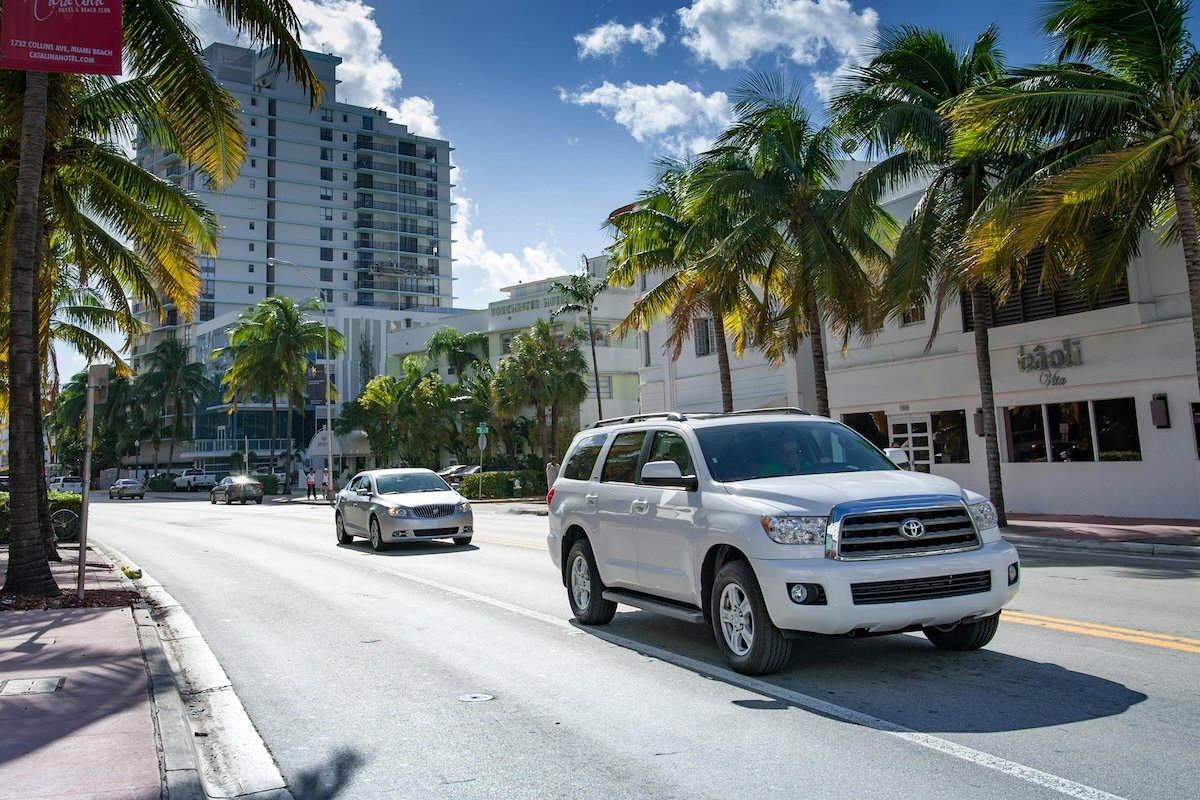
Florida auto insurance guide · Stuart, FL
Florida Auto Insurance Requirements and Coverage, Explained
Plain-English answers on PIP, Property Damage Liability, Bodily Injury and Uninsured Motorist coverage from a local independent agency. Every personal auto policy we write starts at $100,000/$300,000 in Bodily Injury Liability.

- Independent agency since 2017
- 100/300 agency minimum
- Local office in Stuart
What every Florida driver should know about auto insurance
Florida requires very little auto insurance compared with what a serious crash can cost. This guide explains what the state requires, what PIP, Property Damage Liability, Bodily Injury Liability and Uninsured Motorist coverage do, and how to compare quotes so you know what you are buying.
It is written by the team at Manchester Insurance, an independent insurance agency in Stuart that works with drivers throughout Florida, with a strong local presence in Port St. Lucie and across the Treasure Coast.
Our agency minimum. Every personal auto policy we write includes Bodily Injury Liability of at least $100,000 per person and $300,000 per accident, well above what Florida requires to register a vehicle.
How auto insurance works in Florida
Auto insurance is a contract that pays for specific types of losses involving your vehicle, up to the limits you choose and subject to the policy's terms. Some coverages pay for injuries and damage you cause to other people. Others pay for your own injuries or your own vehicle.
Florida is a no-fault state. Your own Personal Injury Protection pays a share of certain medical and income losses after a crash, no matter who caused it. The state minimums stop there. They do not pay for injuries you cause to others, and they do not pay to repair or replace your own vehicle.
That is why the right policy depends on more than the minimum. Your income, savings, home equity, household drivers, vehicles and loan or lease terms all affect how much protection you may want.
Limits and deductibles shape every policy
A limit is the most the insurer pays for a covered loss. A deductible is the share of a covered comprehensive or collision claim you pay first. Low limits can leave you personally responsible for the rest of a large claim. A higher deductible usually lowers the premium but raises what you pay after a loss.
"Full coverage" is not a real policy type
There is no standardized full coverage auto policy. People usually mean liability plus comprehensive and collision, but two "full coverage" quotes can have very different limits, deductibles, endorsements and exclusions. Compare what is on the quote, not the label.
What Florida requires for auto insurance
According to the Florida Department of Highway Safety and Motor Vehicles, a vehicle with at least four wheels that is registered in Florida must carry at least $10,000 of Personal Injury Protection and $10,000 of Property Damage Liability, and the coverage must stay in force for as long as the vehicle is registered, even if it is not being driven.
The state also notes that a lapse in required coverage can lead to suspension of your driver license and plate for up to three years and a reinstatement fee of up to $500, and that the plate should be surrendered before the insurance is canceled. Requirements can change, so confirm current rules with the FLHSMV.
Personal Injury Protection (PIP)
State minimum: $10,000Personal Injury Protection is the coverage behind Florida's no-fault system. It pays a share of certain losses for you and other eligible people regardless of who caused the crash. Depending on the situation, PIP may apply to you, relatives who live in your household, and certain passengers and others who do not have PIP of their own.
The 14-day rule and the emergency medical condition distinction
- Get care within 14 daysInitial services and care generally must be received within 14 days after the crash for PIP medical benefits to apply.
- A medical determination is madeA qualified provider determines whether the injured person had an emergency medical condition.
- That determination affects the medical limitUp to $10,000 with an emergency medical condition, and up to $2,500 if it is determined there was none.
Not every crash or injury qualifies for the full amount. What is available depends on timely treatment, the medical determination, the providers involved and the policy's terms. Some policies also carry a PIP deductible.
PIP does not pay to repair any vehicle, and it does not pay for injuries you cause to people outside your PIP coverage. Serious injuries can still lead to claims against an at-fault driver, which is where Bodily Injury Liability comes in.
Property Damage Liability (PDL)
State minimum: $10,000Property Damage Liability pays for damage you cause to someone else's property when you are legally responsible, up to your limit. It does not pay for your own vehicle.
Common examples include rear-ending another vehicle, backing into a parked car, or sliding into a fence, mailbox, utility pole, storefront or landscaping.
Why $10,000 can fall short: repairing or replacing a late-model vehicle can cost more than $10,000 on its own, and a crash involving several vehicles or a structure can exceed it quickly. Damage above your limit can become your personal responsibility.
Higher PDL limits are typically available. We can show you what each option costs on your own quote.
Bodily Injury Liability (BI)
Required in certain situationsBodily Injury Liability protects you when you are legally responsible for injuring or killing someone else in a crash. Subject to your limits and the policy's terms, it can help pay the injured person's covered damages, such as medical bills and lost wages, and it generally includes a defense against covered claims as set out in the policy.
BI limits are shown as two numbers, such as 100/300: up to $100,000 for each injured person and up to $300,000 total for one accident.
When Florida can require Bodily Injury Liability
Bodily Injury Liability is not part of the standard requirement to register a private passenger vehicle in Florida. The state can, however, require some drivers to prove they carry it:
| Situation | What may be required | How it is usually shown |
|---|---|---|
| Standard vehicle registration | PIP and PDL. BI is not part of the standard requirement. | Proof of insurance at registration |
| After certain crashes, license suspensions or driving offenses | Proof of Bodily Injury and Property Damage Liability to reinstate or keep driving privileges. | An SR-22 filing by the insurer |
| After a DUI conviction | Liability limits well above the standard minimums, for a period set by the state. | An FR-44 filing by the insurer |
Swipe the table sideways to see every column.
Our agency minimum is $100,000/$300,000. Every personal auto policy Manchester Insurance writes includes Bodily Injury Liability of at least $100,000 per person and $300,000 per accident. Without BI, a driver who seriously injures someone has no auto liability coverage to respond to that claim. Drivers who want more protection often look at higher limits or a personal umbrella policy.
Filing requirements depend on the individual driving record and state or court orders. This is general information, not legal advice. Confirm your own requirements with the Florida Department of Highway Safety and Motor Vehicles.
Uninsured/Underinsured Motorist (UM/UIM)
Optional, offered with BIUninsured motorist coverage helps pay for injuries to you and other covered people when the at-fault driver has no Bodily Injury Liability coverage, or cannot be identified, as in many hit-and-run crashes.
Underinsured motorist coverage helps when the at-fault driver has BI, but not enough to cover the injuries.
Because Bodily Injury Liability is not required for standard registration, the driver who hits you may have little or no coverage for your injuries. UM/UIM is the coverage designed for that situation.
How UM differs from PIP
PIP pays a limited share of medical bills and lost income regardless of fault. UM can respond to the broader injury damages you could have recovered from an at-fault driver, up to your UM limit and subject to the policy's terms.
Offer, rejection and limits
When a policy includes BI, UM is offered at limits equal to your BI limits. You can choose lower limits or reject UM in writing on the insurer's form. Read that form carefully before you sign it.
Stacked vs. non-stacked
With stacked UM, limits for each insured vehicle on the policy can combine. Non-stacked UM does not combine them, usually costs less and can limit coverage in some situations. Availability varies by insurer.
Four different questions: the state, your lender, your options and your finances
What Florida requires
$10,000 PIP and $10,000 PDL to register most vehicles, plus Bodily Injury Liability in certain situations.
What a contract requires
Financed and leased vehicles usually require comprehensive and collision, sometimes with a maximum deductible.
What you can add
Higher limits, UM/UIM, Medical Payments, rental reimbursement, roadside assistance, gap and more.
What fits you
Limits that reflect your income, assets and comfort with risk. We explain the options; the decision is yours.
Florida minimum coverage vs. broader protection
A minimum policy satisfies registration. It does not respond to many of the costs a serious crash can create. This comparison shows, in general terms, which coverage responds in common situations. It is not a recommendation of specific limits.
| Situation | State minimum only (PIP + $10,000 PDL) | Adds BI, higher PDL and UM | Also adds comprehensive and collision |
|---|---|---|---|
| Your own medical bills after a crash | PartlyPIP pays a share, up to its limit | PartlyPIP, plus UM if an at-fault driver is uninsured or underinsured | PartlySame as the middle column |
| Damage you cause to another vehicle | Up to $10,000Amounts above the limit may be yours | Higher limitUp to your selected PDL limit | Higher limitUp to your selected PDL limit |
| Injuries you cause to others | No BINo auto liability coverage for the claim | BI respondsUp to your BI limits, per policy terms | BI respondsUp to your BI limits, per policy terms |
| Injured by an uninsured driver | PIP only | UM respondsUp to your UM limits | UM respondsUp to your UM limits |
| Your vehicle damaged in a crash | No coverage | No coverage | CollisionLess your deductible |
| Theft, flood or a falling tree | No coverage | No coverage | ComprehensiveLess your deductible |
Swipe the table sideways to see every column.
General illustration only. Coverage is always subject to the policy's limits, conditions and exclusions. Policies we write start at BI limits of $100,000/$300,000.
How liability limits work: an illustration
Pick a sample injury claim for one person and a per-person Bodily Injury limit. This is an educational illustration, not a prediction of any claim.
An amount above the limit could become the driver's personal responsibility. Real claims depend on fault, the facts, the policy's terms, defense provisions and any other coverage, such as an umbrella policy.
Want to see these options priced for your household?
We will show you how different limits change the premium.
Who pays? Common Florida crash scenarios
Open a scenario to see which coverages generally respond. Every claim depends on the facts and the policies involved.
You rear-end another car. The other driver is hurt and their car is damaged.
- Their injuriesTheir own PIP generally responds first. Claims beyond that may be made against your Bodily Injury Liability.
- Their carYour Property Damage Liability, up to your limit.
- Your carYour collision coverage, less your deductible, if you carry it.
An uninsured driver runs a red light and hits you.
- Your injuriesYour PIP generally responds first. Your Uninsured Motorist coverage may respond to additional injury damages, up to your UM limit.
- Your carYour collision coverage, less your deductible, if you carry it.
A tree falls on your parked car during a storm.
- Your carComprehensive coverage, less your deductible, if you carry it.
- Without comprehensiveThe auto policy generally does not pay for the damage.
A friend borrows your car with permission and causes a crash.
- Damage and injuries to othersYour policy's liability coverage may respond if the friend is an occasional permissive driver and is not excluded. The friend's own policy may also apply.
- Your carYour collision coverage, less your deductible, if you carry it.
Optional Florida auto insurance coverage
These coverages protect your own vehicle, your out-of-pocket costs and your time. Availability, limits and terms vary by insurer.
Comprehensive
Generally helps pay for damage to your vehicle from covered events other than a collision, less your deductible. Examples can include:
- Theft and vandalism
- Fire and falling objects, such as trees and branches
- Hail, wind and flood water
- Hitting an animal, on many policies
Not every event is covered. Exclusions and limits apply.
Collision
Generally helps pay to repair or replace your vehicle after it hits, or is hit by, another vehicle or object, less your deductible. That can include:
- Crashes with another vehicle
- Hitting a pole, wall, guardrail or other stationary object
- Single-vehicle crashes and rollovers
Lenders and leasing companies usually require collision for as long as the loan or lease is in place.
Medical Payments
Medical Payments coverage may help pay covered medical expenses for you and your passengers after a crash, up to its limit. In Florida it can work alongside PIP, for example toward medical costs PIP does not pay. How it coordinates with PIP and health insurance depends on the policy, so review it with your agent.
Rental Reimbursement
Helps pay for a rental vehicle while yours is being repaired after a covered comprehensive or collision claim. It is usually written with a daily limit and a maximum per claim. It is not the same as liability or damage coverage for a car you rent while traveling.
Roadside Assistance
Can help with services such as:
- Towing
- Battery jump-starts
- Flat tire changes
- Lockout service
- Fuel delivery
Service limits, distances and covered costs vary by policy. You may already have roadside help through a vehicle warranty or a membership.
Gap coverage
A vehicle can be worth less than its loan or lease balance, especially early in the loan. After a covered total loss, comprehensive or collision generally pays up to the vehicle's actual cash value, which may not pay off the loan. Gap coverage may help pay the difference.
Insurance-company gap coverage is different from dealer or lender debt cancellation products. Compare terms, limits and exclusions.
Custom equipment, modifications and specialty vehicles
Custom wheels, aftermarket audio, lift kits, performance parts and other modifications may have limited coverage under a standard policy unless they are disclosed. Tell your agent about modifications before a claim, not after.
Classic, antique and collector vehicles are often better suited to a specialty policy designed for limited use. Learn more about classic car insurance.
How auto insurance deductibles work
A deductible is the part of a covered comprehensive or collision claim you pay before the insurance company pays the rest, up to the vehicle's actual cash value. Comprehensive and collision can have different deductibles.
- A lower deductible generally means a higher premium.
- A higher deductible generally means a lower premium, but more out of pocket after a claim.
- Pick a deductible you could pay on short notice.
Example: a covered collision repair costs $5,000 and the policy has a $1,000 collision deductible. Subject to policy terms, the insurer would generally pay $4,000.
Liability coverages such as Bodily Injury and Property Damage Liability generally do not have a deductible. PIP may have its own deductible option. Deductible structures vary by policy.
Deductible calculator
An educational estimate only. Enter the estimated cost of covered damage and a deductible.
Actual claim payments depend on the policy terms, covered damage, exclusions, the vehicle's actual cash value and the claim adjustment.
What Florida auto insurance does not typically cover
A personal auto policy is not designed to cover every vehicle-related risk. These are common exclusions and limitations, not a complete list. Actual coverage depends on the insurer, the policy language, endorsements and the circumstances.
- Intentional damage
- Normal wear and tear
- Mechanical breakdown
- Routine maintenance
- Belongings stolen from the vehicle
- Damage above your selected limits
- Crashes involving an excluded driver
- Use without permission or outside policy terms
- Racing and competitive driving events
- Many delivery and rideshare activities
Using your vehicle for work, delivery or rideshare?
Personal auto policies commonly exclude or limit coverage while a vehicle is used to deliver food or packages, transport passengers for a fee or drive for an app-based platform. Some insurers offer endorsements for this use and some do not. Talk with your agent before you start, and see the personal vs. commercial comparison below.
Belongings stolen from a car are usually a homeowners, condo or renters insurance question, subject to that policy's terms and deductible. Learn more about homeowners insurance.
Rental cars and other people driving your car
Does my Florida auto policy cover rental cars?
Many personal auto policies extend some coverage to a rental vehicle used for personal purposes, but not every policy covers every rental. Look at three things separately:
- Liability: whether your BI and PDL extend to the rental.
- Physical damage: damage to the rental itself generally applies only if you carry comprehensive and collision, and your deductible applies.
- Rental company charges: loss-of-use and administrative fees may or may not be covered.
The rental agreement, the vehicle type (such as moving trucks, large vans or exotic cars), business use and travel outside the United States can all change the answer. Ask your agent before you travel.
What happens when someone else drives my car?
If you give someone permission to drive your vehicle occasionally, your policy may cover them, subject to its terms. This is called permissive use. It is not a blanket rule that "insurance always follows the car."
- Household members and anyone who drives your vehicle regularly are usually expected to be listed on the policy.
- Excluded drivers are generally not covered, even with permission. Review any named driver exclusion carefully before signing it.
- Undisclosed regular drivers can create claim and coverage problems.
The policy language controls. When in doubt, ask before you hand over the keys.
Teen, college, household and senior drivers
Teen drivers
Contact your agent when your teen gets a learner's permit and again when the teen is licensed. The insurer's rules decide when a teen must be rated on the policy, and newly licensed drivers typically raise premiums.
- The vehicle a teen drives can affect the cost.
- Some insurers offer good student or driver education discounts.
- Adding a young driver is a good time to review liability limits.
College students
Students living away from home may be able to stay on a household policy, but the insurer will want to know:
- Whether the student takes a vehicle to school or leaves it at home
- Where the vehicle is garaged
- Changes in how often the vehicle is driven
Rules vary by insurer, so tell your agent before the semester starts.
Multiple household drivers
Insurers ask about everyone in the household of driving age because regular access to a vehicle affects risk. Vehicles may be assigned to specific drivers for rating. Leaving a regular driver off the policy can create problems at claim time, and a named driver exclusion means that person is generally not covered.
Senior drivers
Pricing is based on driving history, vehicles and how the vehicles are used, not age alone. Lower annual mileage, a change from commuting to pleasure use, or an approved driver safety course may affect pricing with some insurers. Review your coverage when driving habits change.
Personal auto vs. commercial auto insurance
Personal auto is generally designed for eligible vehicles used for personal purposes. Commercial auto is designed for eligible vehicles used in business operations. Some business driving can stay on a personal policy, so ownership, use and the insurer's guidelines decide which fits.
| Topic | Personal auto | Commercial auto |
|---|---|---|
| Vehicle owner | An individual or household | Often a business, or a vehicle used mainly for business |
| Typical use | Commuting, errands, personal travel, some incidental business driving | Job sites, service calls, carrying tools and equipment, business deliveries |
| Drivers | Household members and occasional permissive drivers | Employees and other business drivers |
| Vehicles | Cars, SUVs, personal pickups and vans | Work trucks, cargo vans, upfitted vehicles, commercially registered vehicles |
| Liability exposure | Personal driving | Business operations, often with limits required by contracts |
Swipe the table sideways to see every column.
Contractors, service businesses and anyone whose vehicle is titled to a company should review how the vehicle is insured. Learn more about commercial auto insurance in Florida, or see our broader business insurance options.
What affects Florida auto insurance costs
Each insurance company sets rates using its own rating plan and underwriting guidelines. That is why two drivers with similar vehicles can receive very different quotes, and why one insurer may price the same driver differently from another.
The drivers
- Age and driving experience
- Driving history, accidents and violations
- Claims history
- Prior insurance history
- Other household drivers
The vehicles
- Make, model and year
- Vehicle value and repair costs
- Annual mileage
- How each vehicle is used
- Where it is garaged
The coverage
- Liability limits
- Uninsured Motorist selections
- Comprehensive and collision
- Deductibles
- Optional coverages
Young and high-risk drivers
Young drivers, drivers with recent at-fault accidents and drivers with certain violations or a state filing requirement are often priced higher, and fewer insurers may offer coverage. Call us with the details of the driving record and we can talk through what may be available.
Why premiums change at renewal
A renewal can change because of an insurer's rate changes, a claim or violation, a new driver or vehicle, an address change or a removed discount. Some insurers offer multi-policy, multi-car or safe driver discounts, but not every insurer offers every discount.
We do not publish average premiums because statewide averages rarely reflect any one household's price. The useful number is a quote based on your own drivers, vehicles and coverage choices.
Why Florida auto insurance deserves a careful review
Driving in Florida brings a mix of exposures that are easy to overlook when choosing coverage by price alone:
- Heavy and seasonal traffic. Seasonal residents and visitors add traffic in the winter months on roads like I-95, Florida's Turnpike and US-1.
- Severe weather and flooding. Hurricanes, tropical storms and heavy rain can damage or flood vehicles, which is generally a comprehensive claim.
- Theft and vandalism. Also generally comprehensive claims, subject to your deductible.
- Other drivers' coverage. Because BI is not required for standard registration, the driver who hits you may carry little or no coverage for your injuries.
- Repair and injury costs. Vehicles with sensors and cameras can be costly to repair, and serious injury claims can exceed low liability limits.
- The no-fault system. PIP pays first for certain injury losses, but it has limits.
Review comprehensive before hurricane season
Insurance companies may stop accepting new policies or coverage changes when a named storm threatens Florida. Review comprehensive coverage and deductibles well before a storm is in the forecast.
Our office is in Stuart, and we work with drivers across Martin, St. Lucie and northern Palm Beach counties, including Port St. Lucie, Palm City, Jensen Beach, Hobe Sound, Vero Beach, Jupiter and Palm Beach Gardens, as well as drivers throughout Florida.
An auto policy does not cover your home, and a flood policy does not cover your car. If you are reviewing household coverage, see our pages on flood insurance and homeowners insurance.
How to compare Florida auto insurance quotes
Two quotes with different premiums may not provide the same protection. Before comparing prices, line up these items on each quote:
- Bodily Injury Liability limits
- Property Damage Liability limit
- PIP options and any PIP deductible
- Uninsured Motorist limits, stacked or non-stacked
- Comprehensive and collision on each vehicle
- Deductibles for each coverage
- Rental reimbursement limits
- Roadside assistance
- Gap coverage, if financed or leased
- How each vehicle's use is listed
- Listed and excluded household drivers
- Exclusions and endorsements
- Claims handling and policy service
A lower premium can reflect lower limits, a higher deductible or missing coverage. Comparing quotes on equal terms makes the real differences easier to see.
A good time to review is at renewal and whenever something changes: a new vehicle, a new driver, a move or a premium increase. If you switch insurers, make sure the new policy starts before the old one ends so your required coverage does not lapse.
Why Florida drivers work with Manchester Insurance
Manchester Insurance, LLC is a family-owned independent property and casualty insurance agency founded in 2017 and based in Stuart, Florida. The agency holds more than 40 carrier appointments across personal lines, commercial lines and specialty programs. Not every appointment includes personal auto insurance.
Independent vs. captive agencies
A captive agent represents one insurance company. An independent agency is appointed with several, which lets us look at more than one auto insurer for a household. Each insurer has its own underwriting guidelines, so we focus on the companies whose guidelines fit your drivers and vehicles.
What working with us looks like
- A local Florida agency team you can call or visit
- Access to more than one auto insurance company, where available
- Plain-English explanations of PIP, BI, UM and physical damage coverage
- Side-by-side comparisons of limits and deductibles
- An agency minimum of $100,000/$300,000 in Bodily Injury Liability on personal auto policies
- Help coordinating auto with home, umbrella and boat coverage
Ready for a quote? Our auto insurance page covers how we quote personal auto for individuals and families.
What information is needed for an auto insurance quote?
- Names of all household drivers
- Dates of birth
- Florida driver license information
- Vehicle year, make and model
- Vehicle identification numbers (VINs)
- Garaging address
- Ownership, loan or lease details
- Annual mileage
- How each vehicle is used
- Recent accidents and violations
- Current or prior insurance information
- Coverage limits you want to compare
The information required varies by insurer. Your current declarations page is a helpful reference for the coverage you have today.
Do not have everything yet? Start anyway. Basic driver and vehicle details are enough to begin, and we can fill in the rest with you.
Florida auto insurance terms
- Actual cash value (ACV)
- A vehicle's value at the time of loss, reflecting age, mileage and condition. Comprehensive and collision payments are generally based on it.
- Declarations page
- The summary page of your policy that lists drivers, vehicles, coverages, limits, deductibles and premium.
- Endorsement
- A change to a policy that adds, removes or modifies coverage.
- Excluded driver
- A person named on the policy as not covered when driving an insured vehicle.
- FR-44
- A state filing an insurer submits to certify higher liability limits, generally after a DUI conviction.
- Named insured
- The person or people listed on the declarations page who hold the policy.
- No-fault
- Florida's system in which your own PIP pays certain injury losses regardless of who caused the crash.
- Permissive use
- When someone drives your vehicle occasionally with your permission. Coverage depends on the policy.
- Split limits
- Liability limits written as numbers such as 100/300: per person and per accident for Bodily Injury.
- SR-22
- A state filing an insurer submits to certify liability coverage, often required to reinstate driving privileges.
- Stacking
- Combining Uninsured Motorist limits across insured vehicles on a policy, where offered.
- Total loss
- When repairing a vehicle would cost more than it is worth, or it cannot be repaired, the insurer generally pays its actual cash value instead.
Get a Florida auto insurance quote from a local independent agency
Tell us about your drivers and vehicles, and we will help you compare limits, deductibles and options from the auto insurers that fit your household, starting at our agency minimum of $100,000/$300,000 in Bodily Injury Liability.
Manchester Insurance, LLC · 1239 SE Indian St., Suite 101, Stuart, FL 34997 · (772) 530-5305
Florida auto insurance frequently asked questions
Short answers to the questions Florida drivers ask most. These are general explanations. Your policy's terms, limits, conditions and exclusions control what is covered.
Florida requirements
What auto insurance is required in Florida?
A vehicle with at least four wheels that is registered in Florida must carry at least $10,000 of Personal Injury Protection (PIP) and $10,000 of Property Damage Liability (PDL). The coverage must stay in force for as long as the vehicle is registered, even if it is not being driven. Bodily Injury Liability is not part of the standard registration requirement.
Is Bodily Injury Liability required in Florida?
Not to register a typical private passenger vehicle. The state can require proof of Bodily Injury Liability after certain crashes, license suspensions or driving offenses, and drivers convicted of DUI must carry higher liability limits for a period set by the state. Lenders, leasing companies and umbrella insurers may also require it. Manchester Insurance's agency minimum for personal auto is Bodily Injury Liability of $100,000 per person and $300,000 per accident.
What is the minimum PIP coverage in Florida?
The required minimum is $10,000 of PIP per person. Some insurers offer additional PIP-related options or PIP deductibles, so the details on your policy may differ from the minimum.
What happens if I drive without insurance in Florida?
If required PIP and PDL coverage lapses, the state can suspend your driver license and license plate for up to three years, and reinstatement can require a fee of up to $500. You may also be personally responsible for damage and injuries you cause. If you plan to stop driving a vehicle, surrender the plate before canceling the insurance.
Can Manchester Insurance write a policy with only PIP and PDL?
No. Our agency minimum for personal auto is Bodily Injury Liability of $100,000 per person and $300,000 per accident, so we do not write policies with only PIP and PDL. We can show how higher limits change the premium.
PIP and liability
What does Florida PIP insurance cover?
PIP generally pays 80% of eligible medical expenses and 60% of lost income, up to the policy limit, plus a separate $5,000 death benefit, regardless of who caused the crash. Benefits depend on treatment timing, medical determinations and policy conditions. PIP does not pay for damage to vehicles or for injuries you cause to people who are not covered by your PIP.
Does PIP cover passengers?
Often, yes. Passengers in your vehicle who do not have their own PIP coverage may qualify under your policy. A passenger who owns a vehicle with PIP usually turns to their own policy first. The order of coverage depends on each person's situation.
What is the 14-day PIP rule?
To be eligible for PIP medical benefits, an injured person must receive initial services and care within 14 days after the crash from a qualifying provider, such as an emergency room, hospital or physician. If you are hurt, get evaluated promptly, even if the injury seems minor.
What is the difference between PIP and Bodily Injury Liability?
PIP pays certain medical and income losses for you, your household and eligible passengers, regardless of fault. Bodily Injury Liability pays for injuries you cause to other people when you are legally responsible, and it generally includes a defense for covered claims, as set out in the policy. They protect different people and are not substitutes for each other.
Should I carry Bodily Injury Liability in Florida?
That depends on your income, assets, household and how much risk you are comfortable keeping. Without Bodily Injury Liability, a driver who seriously injures someone has no auto liability coverage paying that claim or providing a defense. We can show you the price of different limits side by side so you can decide. This is general information, not legal or financial advice.
What is Property Damage Liability?
Property Damage Liability pays for damage you cause to someone else's property, such as another vehicle, a fence, a mailbox or a building, when you are legally responsible. Florida requires at least $10,000, which can be used up quickly in a crash involving a newer vehicle or more than one vehicle.
Uninsured motorist and full coverage
What is Uninsured Motorist coverage?
Uninsured/Underinsured Motorist (UM/UIM) coverage helps pay for injuries to you and other covered people when the at-fault driver has no Bodily Injury Liability coverage, not enough of it, or cannot be identified, as in many hit-and-run crashes. It applies to injuries, not to damage to your vehicle.
Is Uninsured Motorist coverage required in Florida?
No. When a policy includes Bodily Injury Liability, the insurer must offer UM coverage at limits equal to the Bodily Injury limits. The named insured can reject UM or select lower limits, but only in writing on the insurer's form.
What is the difference between stacked and non-stacked UM?
With stacked UM, the UM limits for each insured vehicle on the policy can combine. For example, $100,000 of UM on two vehicles could provide up to $200,000. Non-stacked UM does not combine limits, usually costs less, and can limit coverage in certain situations. Availability and terms vary by insurer.
What does full coverage auto insurance mean?
There is no standard full coverage policy. People usually use the phrase to mean a policy with liability, comprehensive and collision coverage. Two full coverage quotes can have very different limits, deductibles and options, so compare the coverage on each quote, not the label.
Claims and coverage questions
Does comprehensive insurance cover hurricane damage?
Generally, yes. Wind, falling trees and flood water damage to a covered vehicle are typically comprehensive claims, subject to your deductible. Without comprehensive, storm damage to your own vehicle is usually not covered. Insurance companies may stop accepting new policies or coverage changes when a storm threatens Florida, so review this before hurricane season.
Does collision insurance cover hitting an animal?
On most personal auto policies, hitting an animal is a comprehensive claim, not a collision claim. Swerving to avoid an animal and striking a tree or guardrail is generally a collision claim. Your policy wording controls.
Does auto insurance cover a stolen vehicle?
Theft of a covered vehicle is generally a comprehensive claim. Personal belongings stolen from inside the vehicle are usually not covered by the auto policy, although a homeowners, condo or renters policy may respond, subject to its deductible.
Does Florida auto insurance cover rental cars?
Many personal auto policies extend some coverage to a rental car used for personal purposes in the United States, but liability and physical damage are handled separately, and physical damage applies only if you carry comprehensive and collision. Rental agreement terms, the type of vehicle, business use and international rentals can change the answer, so check before you travel.
Does auto insurance cover someone else driving my car?
An occasional driver using your vehicle with permission may be covered under your policy, subject to its terms. People who live with you or drive your vehicle regularly usually need to be listed on the policy, and a driver who is specifically excluded is generally not covered at all.
What should I do about insurance after an accident in Florida?
Get medical care promptly if anyone is hurt, keep in mind the 14-day PIP rule, exchange information with the other driver, take photos and report the claim to your insurance company as soon as you can. An at-fault crash can affect future pricing; how much depends on the insurer.
Drivers, vehicles and business use
Does my auto insurance cover a teen driver?
A licensed teen who lives in your household is generally expected to be listed on your policy. Insurers have different rules for drivers with a learner's permit, so contact your agent when your teen gets a permit, not after the first crash.
When should I add a teenager to my auto policy?
Tell your agent when your teen receives a learner's permit and again when the teen is licensed. The insurer's rules determine when the teen must be rated on the policy. Planning ahead also gives you time to compare vehicle choices and coverage limits.
Can drivers with accidents, tickets or an SR-22 get auto insurance?
Often, yes, but options narrow. Some insurers accept drivers with recent accidents, violations or a state filing requirement, and others do not. Call us with the details of the driving record and we can tell you what may be available.
Can I insure multiple vehicles on one policy?
Generally, yes. Household vehicles are commonly insured on one policy, and some insurers offer a multi-car discount. Each vehicle can have its own deductibles and physical damage coverage.
Does auto insurance cover a car used for business?
A personal auto policy may cover commuting and some incidental business driving, but it commonly excludes or limits deliveries, rideshare, carrying goods or people for a fee, and vehicles owned by a business. Tell your agent how the vehicle is used before you start using it for work.
What is the difference between personal and commercial auto insurance?
Personal auto is designed for vehicles owned by individuals and used mostly for personal purposes. Commercial auto is designed for vehicles used in business operations, such as company-owned vehicles, work trucks and vans, employee drivers and business deliveries.
Cost, deductibles and quotes
What factors affect Florida auto insurance rates?
Common factors include the drivers in the household, driving and claims history, the vehicles, where they are garaged, how they are used, annual mileage, prior insurance, and the limits and deductibles you select. Each insurer weighs these factors differently.
Why did my Florida auto insurance premium increase?
Premiums can change because of an insurer's approved rate changes, a claim or violation, a new driver or vehicle, an address change, a removed discount or different coverage selections. Ask your agent to compare the renewal with your prior term line by line.
How do auto insurance deductibles work?
A deductible is the part of a covered comprehensive or collision claim you pay before the insurer pays the rest, up to the vehicle's value. A higher deductible usually lowers the premium. Liability coverages generally do not have a deductible.
Do I need collision coverage on a financed vehicle?
Florida law does not require collision coverage, but most lenders and leasing companies require comprehensive and collision for as long as the loan or lease is in place, and they may set a maximum deductible.
What is gap insurance?
Gap coverage may help pay the difference between a vehicle's actual cash value and the remaining loan or lease balance after a covered total loss. Insurance-company gap coverage differs from dealer or lender debt cancellation products, so compare the terms and exclusions.
How often should I compare auto insurance quotes?
A good time to review is at each renewal and whenever something changes, such as a new vehicle, a new driver, a move or a premium increase. Compare equal limits and deductibles so the comparison is fair.
Can I change auto insurance companies before my renewal?
Generally, yes. Your current insurer may refund unused premium, sometimes less a fee. Make sure the new policy starts before the old one ends so your required Florida coverage never lapses.
What information do I need to get an auto insurance quote?
Basic driver and vehicle information is enough to start: names, dates of birth, license information, vehicles or VINs, the garaging address and your current coverage. We can fill in the rest with you.
Official Florida resources
- Florida Department of Highway Safety and Motor Vehicles: Insurance Requirements
- Florida Department of Financial Services: Personal Automobile Insurance Overview
- Florida Department of Financial Services: Automobile Insurance Toolkit (PDF)
This page provides general educational information about auto insurance in Florida. It is not legal, tax or financial advice, a quote, an offer of coverage or a statement of any insurer's policy terms. Descriptions of coverage are general and do not change any policy. Coverage is subject to each insurer's underwriting guidelines and the terms, conditions and exclusions of the policy issued. Coverage cannot be bound, changed or canceled through this page; changes take effect only when confirmed by a licensed agent. State requirements are summarized from official sources and can change; confirm current requirements with the State of Florida. Calculators and examples on this page are illustrations only. Last reviewed .