


Homeowners Insurance in Port St. Lucie, FL
Manchester Insurance is a family-owned independent agency in Stuart, FL, serving Port St. Lucie homeowners. We compare options from multiple Florida carriers and explain the differences, so you can choose coverage that fits your home and budget.

- Independent agency since 2017
- 40+ carrier appointments
- Local office in Stuart
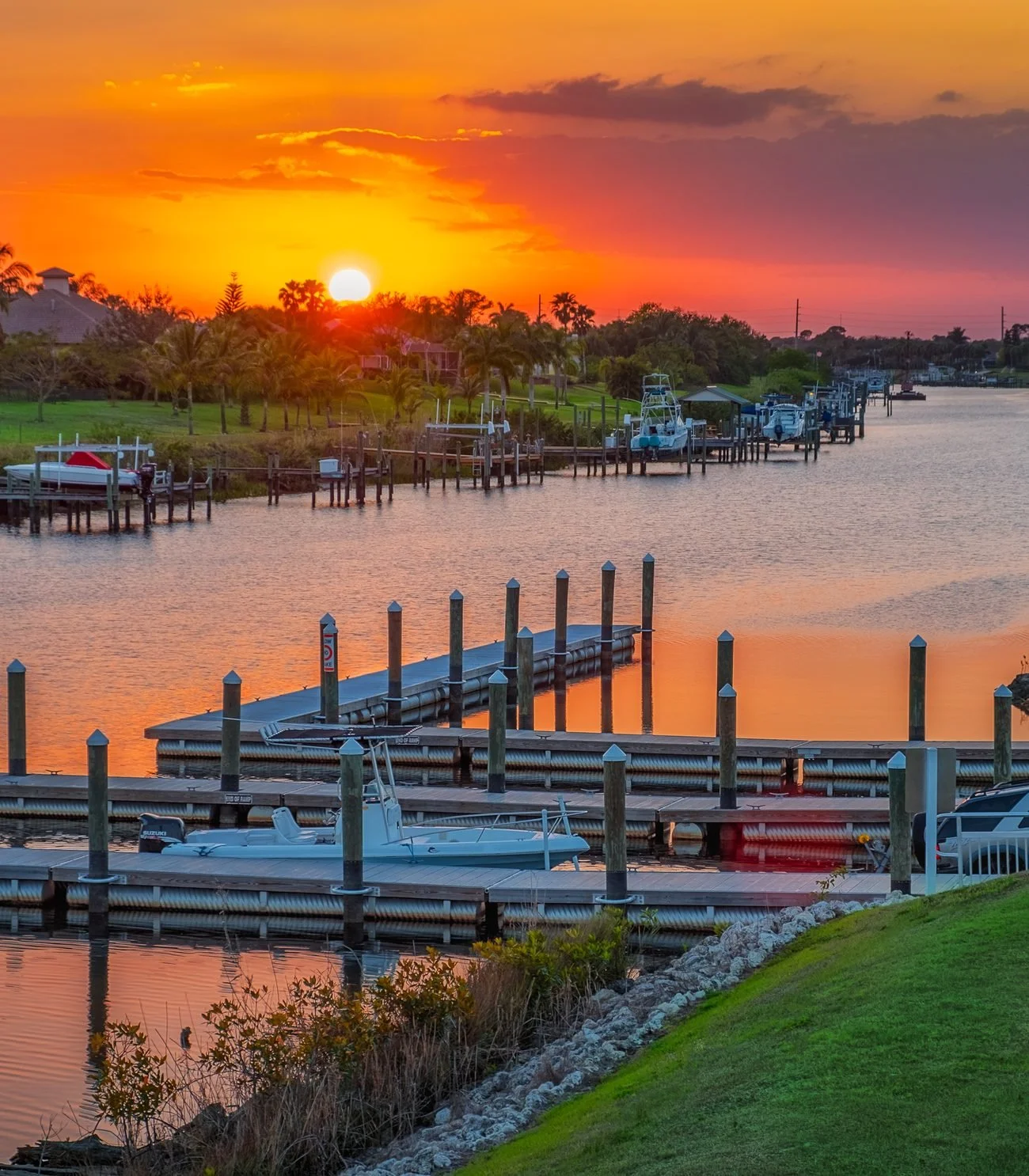
Pictured: Tradition Lake, Port St. Lucie
Port St. Lucie has been the fastest-growing large city in the country for several years running, based on U.S. Census Bureau estimates, and that growth shows up in how homes here get insured. A house in Tradition built in 2021 and a house in Sandpiper Bay built in 1985 are underwritten as if they're in different states: different carriers, different roof requirements, different flood exposure, and sometimes a big difference in premium.
We regularly write homeowners policies across St. Lucie County, and we'll walk you through your options in plain English before you decide. We also work with homeowners in Stuart, Jensen Beach, Palm City, and Hobe Sound across Martin County, and north into Vero Beach.
Whether you're closing on a home, reviewing a renewal that jumped, or just checking whether there's something better out there, we'll walk through it with you.
¿Prefiere hablar en español? Jisel Leon le atiende →
What Makes Port St. Lucie's Insurance Market Different
Port St. Lucie isn't Stuart, and the differences matter more than most homeowners expect. A huge number of homes are hitting the roof-age cliff right now. Port St. Lucie's biggest building boom ran from roughly 2004 through 2007. Those homes are now 19 to 22 years old, and an architectural shingle roof is commonly expected to last 20 to 25 years.
That means thousands of Port St. Lucie homes are crossing the roof-age threshold at the same time, right now. Many Florida carriers get more restrictive as a roof ages, often somewhere between 15 and 20 years depending on the carrier and roof type, and some won't write a new policy on an older roof.
If your home is from that era and still has its original roof, this is the single biggest factor in what you'll pay and which carriers will even look at you. It's worth knowing where you stand before your renewal forces the conversation. If you're trying to budget, our Port St. Lucie homeowners insurance cost guide breaks down current ranges and real examples.
Not sure when your roof was last replaced? The City of Port St. Lucie Building Department lets you search permits on a property by address. The roof permit and its final inspection date are the documentation we'll usually ask for. If your home is in unincorporated St. Lucie County, those records are with the county instead.
Newer construction is a real advantage here
Port St. Lucie's newer neighborhoods, like Tradition, Riverland, and the post-2020 builds throughout the city, were constructed under updated Florida building code. Concrete block construction, hurricane-rated windows or shutters, modern roof-to-wall connections.
In our experience, more carriers are interested in these homes, which usually means more options and more competitive pricing. If you're in a newer build, you may have more options than you realize.
One thing new-construction buyers routinely miss: you still want a wind mitigation report. Your builder may not have provided one, and it's the standard way to document the wind-resistant features that may qualify for discounts. Without it, you may not be getting every credit your home could be eligible for.
Concrete block is the norm, and it helps
Most Port St. Lucie housing stock is concrete block (CBS) rather than wood frame. CBS generally rates better because of how it performs in wind events. It's a quiet advantage this market has, and it's one reason PSL premiums can compare favorably to older coastal Martin County homes.
The flood risk is inland, and it surprises people
This is the one that catches Port St. Lucie homeowners off guard. You can be miles from the ocean and still sit in a flood zone. Port St. Lucie is built around an extensive canal and drainage network, and low-lying inland neighborhoods can carry flood risk that isn't obvious from a map or from how far you are from the coast.
A standard homeowners policy does not cover flood. Flood coverage is a separate policy. If you have a mortgage and you're in a designated zone, your lender may require it. And plenty of homes outside required zones have taken on water. Port St. Lucie also participates in FEMA's Community Rating System, which can lower NFIP flood insurance premiums for properties in the city.
It's worth checking your actual flood zone rather than assuming. You can search your address on FEMA's Flood Map Service Center or the City of Port St. Lucie's flood zone resources, or send us your address and we'll look it up with you. Learn more about flood insurance →
Fewer waterfront exposures than Martin County
Compared with Stuart, Port St. Lucie has proportionally less true waterfront. Homes along the North Fork of the St. Lucie River and on canals can be a different underwriting conversation, closer to what we see in Stuart.
Roof age by build year in Port St. Lucie
Here's how carrier appetite generally changes with a home's build year. Every carrier sets its own guidelines, and roof condition and documentation can change the picture for any individual home.
| Home built | Roof statusWhat carriers look at first | Carrier appetiteYour realistic options |
|---|---|---|
| 2020 or newer | Original roof, built to current code. | Strong. Most carriers compete for these homes, and wind mitigation credits are usually significant. |
| 2008–2019 | Approaching or just past first replacement. | Good, though it increasingly depends on roof condition and documentation. |
| 2004–2007 | Original roof is now 19–22 years old. | Narrowing. This is the cliff, where many carriers restrict or decline as roofs approach and pass 20 years. |
| 1990s–2003 | Likely on a second roof. | Varies widely. Replacement date and documentation matter more than the home’s age. |
| Before 1990 | Multiple replacements; older electrical and plumbing. | Limited. Often needs carriers who specialize in older Florida homes. |
Roof age by build year in Port St. Lucie
Here's how carrier appetite generally changes with a home's build year. Every carrier sets its own guidelines, and roof condition and documentation can change the picture for any individual home.
| Home built | Roof statusWhat carriers look at first | Carrier appetiteYour realistic options |
|---|---|---|
| 2020 or newer | Original roof, built to current code. | Strong. Most carriers compete for these homes, and wind mitigation credits are usually significant. |
| 2008–2019 | Approaching or just past first replacement. | Good, though it increasingly depends on roof condition and documentation. |
| 2004–2007 | Original roof is now 19–22 years old. | Narrowing. This is the cliff, where many carriers restrict or decline as roofs approach and pass 20 years. |
| 1990s–2003 | Likely on a second roof. | Varies widely. Replacement date and documentation matter more than the home’s age. |
| Before 1990 | Multiple replacements; older electrical and plumbing. | Limited. Often needs carriers who specialize in older Florida homes. |
Port St. Lucie Neighborhoods We Serve
Every part of Port St. Lucie has its own insurance profile, mostly driven by when it was built.
Tradition: Port St. Lucie's newest large-scale community, and one of the easiest areas to insure well. Modern code construction, wind mitigation features built in, strong carrier appetite. If you're here and haven't had your wind mit credits applied, you might be leaving money on the table.
Riverland: Newer construction, much of it in active-adult communities. Similar advantages to Tradition: current building code, good carrier competition.
PGA Village Verano: Kolter's newer community within PGA Village, built from 2008 on, with a 55+ section at Cresswind. Current-code construction puts it in the same category as Tradition and Riverland for carrier options, and a wind mitigation report is still worth having on file.
St. Lucie West: Largely 1990s through mid-2000s. Solid CBS construction, but the older sections are firmly in roof-age territory. Carrier availability varies a lot here depending on whether the roof has been replaced.
PGA Village: The established golf community around PGA Golf Club. Much of it was built from the late 1990s through the 2000s, so roof age and replacement documentation drive your options here much like they do in St. Lucie West.
Torino: A mix of build eras, with a good deal of the 2004–2007 cohort. This is the neighborhood profile where roof age most often determines your options.
Sandpiper Bay: Older Port St. Lucie, with homes dating well before the boom. Proximity to the North Fork means some properties carry flood zone designations and can be a different underwriting conversation. Underwriting here looks more like Stuart than like Tradition.
We also write throughout the rest of St. Lucie County, including Fort Pierce and the unincorporated areas.
Port St. Lucie neighborhoods at a glance
These are general patterns we see across each area. Your specific home, roof and flood zone are what actually drive your options.
| Neighborhood | Era | Construction | Flood notes |
|---|---|---|---|
| Tradition | 2005 and later, heavily post-2015 | CBS, current building code | Varies by parcel. Check your zone. |
| Riverland | Post-2020 | CBS, current building code | Varies by parcel. Check your zone. |
| PGA Village Verano | 2008 to present | CBS, current building code | Varies by parcel. Check your zone. |
| St. Lucie West | 1990s to mid-2000s | CBS | Varies by section |
| PGA Village | Late 1990s through 2000s | CBS | Varies by parcel. Check your zone. |
| Torino | Mixed, much of it 2004–2007 | CBS | Varies |
| Sandpiper Bay | Pre-boom | Mixed | Higher, near the North Fork |
From our quoting desk
What we're seeing in Port St. Lucie right now
Updated
- On homes from the 2004 to 2007 building boom, especially in Torino and parts of St. Lucie West, roof year comes up first. Sending your roof permit details and a recent 4-point or wind mitigation report with your request cuts down the back and forth.
- New construction buyers in Tradition, Riverland and PGA Village Verano often close without a wind mitigation report. Ask your builder for one before closing, because it's the standard way to document the features that may qualify for discounts.
- Buyers in inland neighborhoods often assume they don't need to think about flood. Port St. Lucie's canal system means it's worth checking your flood zone on every purchase, and we can look it up with you.
- When a tropical storm or hurricane threatens Florida, carriers can pause new policies until it passes. If you're closing during storm season, start on insurance as soon as you're under contract.
These are general observations from the quotes our team has worked recently, not a prediction of what any carrier will offer on your home.
Port St. Lucie Homeowners Insurance FAQs
-
It varies widely based on roof age, construction type, flood zone, and coverage limits. We've broken down current ranges, real examples, and what drives the differences on a dedicated page. See Port St. Lucie homeowners insurance costs →
-
Often yes, but your options may be narrower. Roof age is one of the biggest factors carriers look at, and each carrier sets its own guidelines. Some weigh a roof's documented condition more heavily than its age alone. This is where an independent agency helps, because we can check your home against more than one carrier's guidelines.
-
All of Florida is in a flood zone. The only difference is whether your home sits in a high flood zone or a low one. In Port St. Lucie, flood risk comes from the canal and drainage system as much as from the coast, and a standard homeowners policy does not cover flood. If you have a mortgage and your home is in a high-risk zone, your lender may require flood coverage. Either way, it's worth a conversation, and we can look up your flood zone with you.
-
In most cases it's worth getting one, and it's one of the most commonly missed steps. Newer homes are built to current wind codes and often have features that may qualify for wind mitigation discounts, and a wind mitigation report is the standard way to document them. Builders don't always provide one, so check with yours first.
-
Most Florida policies carry a separate hurricane deductible, usually a percentage of your dwelling coverage, commonly 2% or 5%. For example, with a $400,000 dwelling limit, a 2% hurricane deductible means the first $8,000 of a hurricane claim is yours. A higher hurricane deductible generally lowers your premium, so it's worth weighing against what you could comfortably pay out of pocket after a storm.
-
It depends on the carrier and on what paperwork your home needs. What usually slows a binder down is missing inspection reports, like a wind mitigation or 4-point. If you've already been through your inspection period, send those over with your contract details. Call us as soon as you're under contract, not the week before closing, so there's time to compare options.
Why Port St. Lucie Homeowners Work With Us
40+ carrier appointments
Because we're independent, we're not tied to one company's pricing or appetite. We know which carriers are writing homes like yours in Port St. Lucie and compare the ones that fit, which matters most when roof age has narrowed your options.
We're local to the Treasure Coast
Our office is at 1239 SE Indian St, Suite 101, Stuart, FL 34997, about 20 to 30 minutes from most Port St. Lucie neighborhoods. We're not a call center. We're real people you can call, email, or stop in and see.
We work with local realtors
We work closely with real estate offices across the Treasure Coast, and we're often one of the first calls a new homeowner makes when coverage needs to be in place before closing. We're also members of Broward, Palm Beaches & St. Lucie Realtors.
No pressure to switch
We'll compare your current policy with what's available and walk you through the differences side by side. If staying put makes the most sense to you, that's fine with us. We'd rather be the agency you call next year than the one that pushed you into a change you didn't want.
Six terms worth knowing before you compare quotes
Coverage A
Your dwelling limit, the most the policy will pay to repair or rebuild the house. It should reflect what it would cost to rebuild, not what the house would sell for or what you paid. Your hurricane deductible is usually a percentage of this number, which is why it matters more than people think.
All other perils deductible
The deductible that applies to most covered losses other than a hurricane. It's usually a flat amount like $1,000 or $2,500, and it's separate from your hurricane deductible.
Loss assessment
Coverage for your share when a homeowners or condo association bills owners for damage the master policy didn't fully cover. The default limit is often small. If you own a villa or townhome in an HOA community, like many in Tradition, PGA Village or Verano, it's worth checking this limit before you compare prices.
Ordinance or Law
Helps pay, up to its limit, the extra cost of rebuilding to current code instead of how the house was originally built. On an older home built to earlier building codes, that difference can be substantial.
Screen enclosure coverage
Some policies limit or exclude wind damage to screened pool cages unless you add coverage back. If your enclosure would be expensive to replace, ask how each quote handles it before you compare prices.
Elevation certificate
A surveyed document showing how high your lowest floor sits compared with the base flood elevation. It isn't always required, but it can affect flood pricing, especially with private flood carriers and in higher-risk zones like AE. If you're buying, ask the seller whether they have one, or check with the City of Port St. Lucie's flood resources.
How to get a Port St. Lucie homeowners quote
-
1
Send us the basics
Address, year built, roof year, and your current declarations page if you have one. Bought newer construction in Tradition or another newer community? A wind mitigation report helps too.
-
2
We compare the right carriers
We compare carriers that are actively writing homes like yours and point out coverage differences, not just price.
-
3
You pick
We walk through the options with you and handle the paperwork, including your lender and closing agent if you're buying. Working with a realtor? They can send us your details directly.